
INTRODUCTION
If you’re trying to decide between an EV and a petrol car, your biggest question is simple: “How much will I actually spend over a year?” You’re in the right place. This guide breaks down real 12-month costs not estimates, not marketing claims but what you’ll likely pay in India.
By the end, you’ll clearly see how EV charging compares to petrol fuel costs based on real driving patterns, electricity rates, and usage scenarios.
The confusing part is this: people compare “cost per km” without looking at how they actually drive. That’s where most calculations go wrong.
This site focuses on practical car decisions for Indian buyers — especially when money and daily usage matter more than specs.
The real difference between EV and petrol cost only shows up when you track it over months, not per trip.
What Is EV vs Petrol Cost Comparison and Why It Matters Right Now
A proper cost comparison means calculating how much you spend running your car over time — including fuel or charging, not just purchase price.
Most people hear numbers like “EV costs ₹1/km” or “petrol costs ₹8/km.” Those are averages. Real life is messier.
In India, petrol prices in many cities are around ₹100–₹110 per litre. Electricity costs vary between ₹6–₹10 per unit depending on state and usage slab.
Here’s a grounded example: a petrol car giving 15 km/l costs roughly ₹7 per km. An EV consuming 0.15 units per km costs about ₹1–₹1.5 per km at home charging.
That’s a big gap. But the real story depends on how much you drive.
What most people realize after switching: the savings feel small daily but huge over months. You don’t notice ₹200 saved today, but ₹20,000 saved over a year feels real.
This matters now because fuel prices remain high while EV adoption is increasing, making long-term cost a key decision factor.
Who This Is For Eligibility or Requirements
This guide is useful if you’re trying to make a practical buying decision, not just follow trends.
- Daily office commuters
If you drive 20–60 km daily, you’ll see the biggest cost difference. EV savings become visible within months. - Ride-share or delivery drivers
High usage means higher fuel costs. EVs can reduce monthly expenses significantly in this case. - Budget-conscious buyers
If your goal is to reduce running cost, this comparison matters more than features or brand. - People with home charging access
This is critical. Charging at home is cheaper than public fast charging. - Anyone comparing EV vs petrol using only “per km cost”
This is the biggest mistake. Real cost depends on total monthly usage, not just per km math.
Who may not benefit much?
If you drive less than 20 km per day, the yearly savings may not be dramatic.
How It Actually Works Complete Process
Let’s break this into a realistic 12-month scenario.
Step 1: Define your usage pattern
Assume an average user drives 1,000 km per month. That’s 12,000 km per year.
This is a common urban usage pattern in India.
Step 2: Calculate petrol cost
If your petrol car gives 15 km/l:
- Monthly fuel needed = ~67 litres
- At ₹105/litre → ₹7,000 per month
- Yearly cost → ₹84,000
This is realistic for city + mixed driving.
Step 3: Calculate EV charging cost
Assume EV efficiency = 0.15 kWh/km:
- Monthly consumption = 150 units
- Electricity cost = ₹8/unit
- Monthly cost = ₹1,200
- Yearly cost = ₹14,400
Even with variation, this stays under ₹20,000 annually.
Step 4: Add real-world variation
Public charging costs more (₹12–₹20/unit). If you use fast charging occasionally, your yearly cost may increase slightly.
When you actually track this, you’ll notice most charging still happens at home — which keeps costs low.
Step 5: Compare total yearly cost
- Petrol: ₹84,000
- EV: ₹14,400–₹20,000
Savings: ₹60,000+ per year
Step 6: Consider maintenance difference
EVs have fewer moving parts. No engine oil, fewer filters.
Typical saving: ₹3,000–₹8,000 annually.
The part most guides miss: your actual savings depend more on how often you drive than what you drive.
Comparison Table EV vs Petrol (12-Month View)
| Option | Key Feature | Best For | Limitation | Verdict |
| Petrol Car | Easy refueling, wide support | Low usage drivers | High fuel cost | Flexible but expensive |
| EV (Home Charge) | Lowest running cost | Daily commuters | Needs charging setup | Best for savings |
| EV (Public Charging) | Fast charging convenience | Long-distance users | Higher charging cost | Balanced option |
If you can charge at home, EVs clearly win in cost. If you depend heavily on public charging, savings reduce but still exist.
Real Benefits With Numbers Where Possible
Here’s what actually changes after 12 months:
- Major fuel savings
Saving ₹50,000–₹70,000 annually is common for regular drivers. - Lower monthly expenses
Instead of ₹7,000 on petrol, you may spend ₹1,500 on electricity. - Reduced maintenance cost
EV servicing is simpler, saving a few thousand yearly. - Predictable expenses
Electricity rates are more stable than fuel prices. - Hidden benefit: fewer fuel stops
When you actually switch, you stop visiting petrol pumps regularly. That convenience feels small but becomes addictive.
The biggest benefit is long-term savings without changing your driving habits.
Mistakes Most People Make and the Fix
One mistake is ignoring charging type.
People assume all charging costs the same. Home charging is cheapest. Use it as much as possible.
Another mistake is overestimating EV savings.
If you drive very little, savings are smaller. Calculate based on your usage.
Many buyers forget electricity slab rates.
Higher usage may increase per unit cost. Factor this into calculations.
People also compare new EV with old petrol car.
This creates unfair comparisons. Compare similar segments.
The subtle mistake: ignoring lifestyle changes.
EVs require planning charging, not refueling. This shift matters more than cost for some users.
Expert Tips That Actually Work
Track your current fuel expense for one month.
This gives a real baseline for comparison.
Install a home charger if possible.
It reduces dependency on public stations.
Charge during off-peak hours.
Some areas offer lower electricity rates at night.
Use regenerative braking effectively.
It improves efficiency and reduces cost further.
Avoid frequent fast charging.
It’s convenient but more expensive.
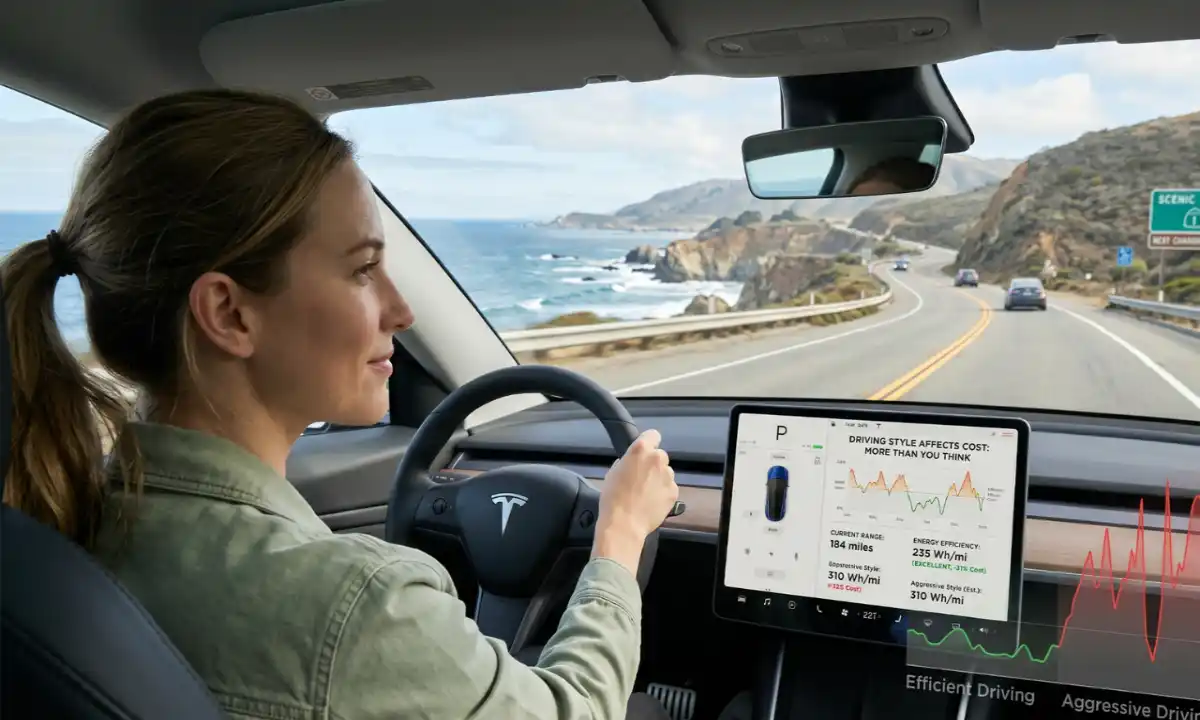
Here’s something surprising: driving smoothly in an EV can reduce energy use by up to 10–15% — more than most people expect.
Your driving style affects EV cost more than you think.
Frequently Asked Questions
Is EV cheaper than petrol in India?
Yes, in most cases. EV running cost is significantly lower, especially with home charging.
How much can I save in a year with EV?
Typically ₹40,000 to ₹70,000 depending on usage.
Does electricity cost increase with EV charging?
Yes, higher usage may move you into higher tariff slabs. Factor this into calculations.
Is public charging expensive?
It’s more expensive than home charging but still cheaper than petrol.
What is the cost per km for EV vs petrol?
EV: ₹1–₹1.5/km
Petrol: ₹6–₹8/km
Does EV maintenance cost less?
Yes, fewer components mean lower maintenance cost.
Is EV worth it for low usage?
Savings exist but are smaller. Decision depends on long-term plans.
How often do I need to charge an EV?
Usually once every few days depending on usage.
Are petrol prices expected to increase?
Historically, fuel prices trend upward over time, increasing long-term cost.
Quick Summary Take This Away
The real difference between EV and petrol cost becomes clear only when you track it over a full year. Daily savings may feel small, but over 12 months, they add up significantly.
For an average user driving 12,000 km annually, petrol costs can reach around ₹80,000 or more, while EV charging typically stays under ₹20,000. That gap alone makes EVs financially attractive for regular drivers.
The biggest factor is your driving pattern. Higher usage means higher savings with EVs. Lower usage reduces the difference but still keeps EV cheaper.
Charging method also matters. Home charging offers the lowest cost, while public charging slightly reduces savings but doesn’t eliminate them.
When you look at the complete picture — fuel, maintenance, and convenience — EVs clearly offer a long-term cost advantage.
Your next step: calculate your monthly driving distance and current fuel spend to see your exact potential savings.
CONCLUSION
The EV vs petrol debate becomes much simpler when you focus on real numbers over time instead of isolated figures.
If you drive regularly and have access to home charging, EVs offer clear financial benefits. The savings are consistent, predictable, and grow over time.
Petrol cars still offer flexibility and convenience, especially for low usage or areas with limited charging infrastructure.
Your decision should come down to how you actually use your car — not just what looks cheaper on paper.
Once you match your usage with the numbers, the right choice becomes obvious.
Also Read : Defender Octa vs V8 | High RPM Overkill?